Showing posts with label Tests. Show all posts

Saturday, 27 May 2023

I'm glad to say your test results are normal...

“I’m glad to say your test results are normal – I hope that reassures you.” This is a phrase that I’ve heard quite often recently, and I guess that most people would expect me to be happy to hear these words. After all, who wants their test results to come back showing an abnormality? Well, actually, I do. And I want to explain why.


Unless you’ve been ill with something that you’re struggling to get a diagnosis for, it probably seems like quite a strange concept to hope and pray for an abnormal test result. Most of the time people are wishing for the exact opposite – that their tests come back clear and show that nothing worrying is going on. But for a lot of people, particularly those with chronic illnesses, we are desperate to just get something back that points towards an answer.


For the last eighteen months, I’ve been having more problems with my health. I already have Ehlers-Danlos Syndrome and various associated conditions, so I’m no stranger to struggling to get a diagnosis (it took me twenty five years to finally get that diagnosis). I’d hoped that I was past that period of my life when I finally got my EDS diagnosis and started finding out what else was wrong with me. But unfortunately, that doesn’t seem to be the case, and for the last year and a half I’ve developed a whole array of new and interesting symptoms. Recurrent fevers, significant unintentional weight loss, severe night sweats, debilitating fatigue, strange rashes and skin lesions that will stay on my body for weeks at a time, joints that swell, turn red and feel burning hot, bleeding under my skin and changes to my nails to name but a few. This also seemed to coincide with my asthma getting worse. As you can probably tell, it hasn’t been much fun!


My GP has done various blood tests and my Rheumatologist has also sent me for tests like an ultrasound of my hands and a Nuclear Medicine Full Body Bone Scan. They suspected I might have something like Rheumatoid Arthritis, Lupus or even cancer. But most of my results have come back completely normal (and the ones that haven’t don’t seem to point to any particular diagnosis). Now, don’t get me wrong, it’s great that I don’t have these things. I keep being told that I don’t have this wrong with me and I don’t have that wrong with me. But what no-one is doing is telling me what is wrong with me!


I’ve lost count of how many times I’ve prayed and wished that a test would come back just showing something – anything! And how many times I’ve cried when I’ve had that letter telling me ‘I’m glad to say your test results were all normal. I hope that reassures you.’ Because to be blunt – no, it doesn’t reassure me anymore! For the last eighteen months, my body seems to have been slowly falling apart. I’ve spent more time in bed and on the sofa than I have up and about. I’ve lost so much of my independence – I can’t drive at the moment, I need help to have a shower, I can barely lift my nieces and nephews to give them a cuddle. I’m rarely able to leave the house, and when I manage to push myself to do something (because I need to try and look after my mental health as well) it takes me weeks to recover from it. Most of my time is spent sleeping, resting or feeling too unwell to do either of those things so just attempting to get comfortable. Something isn’t right – no healthy person gets these symptoms and spends their days like this. So to keep being told that there’s nothing wrong doesn’t make me feel reassured at all. It just makes me more frustrated.


It's not that I want something to be wrong with me when I hope for an abnormal test result. It’s that I already know something isn’t right with my body because of all of the things I’ve shared above – I just want to know what it is. I want a test to tell me that I’m not going completely mad and that there is something going on inside my body that’s giving me all these symptoms. I want a test to point us towards a diagnosis so that I actually have a name for what’s making me ill. Because, without a diagnosis, I’m currently not able to access any support, any treatment, any management for my symptoms or even any acknowledgement that I’m not well. And without a diagnosis, I have no hope of things getting better.


I felt a bit nervous about writing this post, because even after explaining why I want an abnormal test result, I still worry that people won’t understand and will think I’m just strange. But I wanted to share it because I know I’m not the only one to be going through this. So many people are in (or have been in) a similar boat, and it can be a really lonely boat to be in. Most medical professionals don’t seem to understand that getting normal tests back isn’t making us feel any better, so there’s no support from them to help us deal with not having a diagnosis. And healthy people don’t tend to understand either, so we can’t really talk to friends and family. So I wanted to share my experiences in the hope it will help others to feel less alone in what they’re going through, and to reassure you that it’s perfectly normal to want those answers. I can’t imagine anyone going through this would not want to know why. So please don’t beat yourself up for getting sad and frustrated about normal test results, even if no-one around you understands you. You’re not alone in this journey, and all I can say is keep fighting. I know from experience how important it is to listen to your gut, and if your body is trying to show you that something isn’t right, then chances are something isn’t right. I just hope that, one day soon, we will all get to those answers so we can get on with treating or managing our conditions and start living our lives again.


Is this something you can relate to? Are you currently trying to get a diagnosis and just keep getting normal test results back?


Friday, 20 September 2019

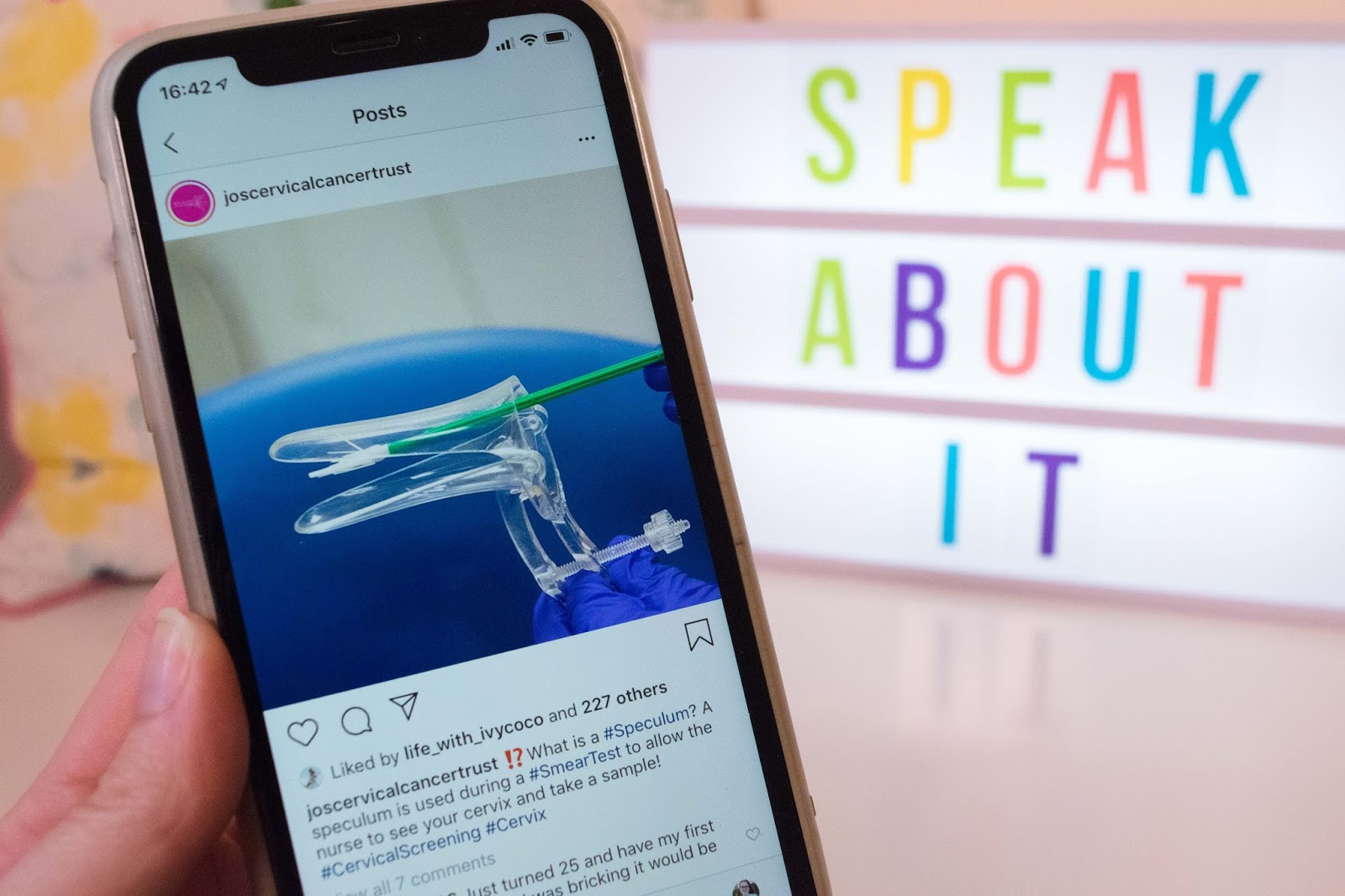
What if getting your Smear Test isn't straightforward?

According to the charity Jo’s Cervical Cancer Trust, attendance for cervical screening (or smear tests) is at a 19-year low in England and a 10-year low in Scotland and Wales. This means that, when they receive their invitation letter, one in four women are not making an appointment to be checked. Things are going on to try and help reverse this shift. For example, the recent Channel 4 documentary about Jade Goody’s life, which includes her journey with cervical cancer, has got a lot of women talking about, and booking, their cervical screening tests. And recently, Zoe Sugg (aka. Zoella) uploaded a video that showed her having a smear test and asking the nurse various questions about the procedure. Over 1.4 million people have watched it so far. And it’s not just these high profile celebrities who are raising awareness of why it’s so vital to go for your cervical screening appointments. You only have to look at Instagram to see hundreds of thousands of pictures discussing the importance of having regular smears. 


And don’t get me wrong – this movement of women taking ownership of their health and encouraging others to do so too is fantastic. And for most people, these campaigns are enough to inspire them to book an appointment and get checked themselves. But the thing I struggled most with, was trying to find stories from people for whom having a smear test isn’t as straightforward as most people say it is. In amongst all the amazing posts and media about why it’s so important to have a smear test, I also found a lot of content shaming people for not having one. And that’s why I have decided to write this post. Not to put people off going for their appointments or to scare people off who haven’t been for a test yet. But to reassure others that they’re not alone if they struggle, for whatever reason, to go for their cervical screening. And that that struggle is nothing to be ashamed of. 


Like most women, I received an invitation to go for my first smear test just before my 25thbirthday. As someone that has had a huge number of medical tests over the years, I wasn’t too worried about the prospect of another one and so, fairly quickly, booked in with my GP Practice. On the day of my test, although feeling a little apprehensive about something new and different, I went in to see the nurse on my own, as I have done with many tests before. She asked me all the usual questions and told me how the test would be carried out, and then asked me to lay on the bed so she could proceed with the test. And this is where things started to go wrong. I found the test incredibly painful – so much so that I was in tears because of it. It didn’t help that the nurse I saw didn’t seem to be particularly gentle or sympathetic, and made comments about how difficult I was making it. After what felt like ages she finally managed to get the sample and I left feeling completely traumatised. 


Thankfully the result came back negative, so I tried to just forget about my experience for the next three years. But when my next invitation letter came three years later, the panic set in. I just couldn’t face going through that experience again. In the end, I went to talk to my GP about it. She told me that it was my choice whether I went to have the cervical screening done and that I didn’t have to get it done if I didn’t want to. But the problem was, I did want to – I knew how important the test was and I wanted to make sure I was doing everything I could to keep myself as healthy as possible. We talked about it quite a lot and in the end, decided that I would give it a try and if things really didn’t work, then we could talk again. She did also recommend asking the nurse to use a smaller speculum. 


And so, with a lot of apprehension, I booked in for my second cervical screening test. This time round, I decided to take my Mum into the test with me for some moral support. Pretty much as soon as I entered the room though, the nurse asked me why I’d brought my Mum in. I explained that I had found the test traumatic last time and for a couple of other reasons as well, I just needed someone I trusted with me. The nurse then told me that it was very strange that I would bring someone in with me and that she’d never seen anyone else need to do that before. My Mum was told to wait in the room next door while I had the test, so I was effectively on my own. So before we’d even started the test, I was feeling humiliated and upset for being what I now felt was strange. And the test didn’t go much better. We had the same problems with excruciating pain and the nurse not being particularly gentle while she tried to find my cervix. She kept telling me that my cervix was in a funny place and that I shouldn’t be in so much pain. Despite all this, somehow, she managed to take a sample and I left. 

I remember leaving the Doctors Surgery and bursting into tears – I felt like there must be something really wrong with me. Everyone else I had spoken to or heard talk about having a smear test said it was, at worst, a bit uncomfortable, but was over in a couple of minutes. So why wasn’t it like that for me? Ever since then, I have felt embarrassed about the whole process and the fact I couldn’t do what every other women could apparently do. 


Then a few months ago, I received my next invitation letter and my anxiety hit the roof again. This time, I really was tempted to just not go because after two horrible experiences and some other life events that have happened, it felt like burying my head in the sand was the easiest thing to do. Problem was, I had been getting some bleeding in between my periods and knew that, if I went to see my GP about it, the first thing she would say is that I needed a smear test. Plus, the bleeding was also giving me massive anxiety because I had no idea what was causing it. So I could either ignore my letter and continue to worry about the bleeding, or book an appointment and worry about the test instead. I went for the second option.

Out of all the medical tests I’ve had (and some have been pretty horrible) I think this was the one I felt most anxious about. In the weeks leading up to my appointment I was getting panic attacks, not sleeping properly, nightmares and generally just felt awful. The day came and this time my appointment was with a new nurse I had never seen before. I decided to go in on my own and I’m pretty sure as soon as I sat down the nurse could tell how anxious I was! She talked to me for quite a while, going through the normal questions and asking about previous tests. I tried to explain to her about the problems I had had with my previous tests and how worried I was about being there. I also spoke about my Ehlers-Danlos Syndrome, and how it can make it more painful to lie in the correct position. She was very sympathetic, listened to me and I didn’t feel judged at all, which started to put me at ease. As I lay on the bed, she explained exactly what she would be doing and showed me the instruments she would be using. She had got out a smaller speculum at my request and showed me exactly how it worked. Then she told me she would talk me through everything she was going to do and that if, at any time, I was finding it too difficult, I could ask her to stop.


The first time she tried I think I nearly shot through the roof because of the pain it caused, but true to her word, she immediately stopped and gave me some time to just breathe, move around and relax. When I was ready, she tried again, and this time, although it was uncomfortable, I wouldn’t say it was painful. I tried to focus on my breathing to keep myself calm, but after a while, the nurse told me that she was unable to find my cervix and would need to try again. My heart sank. But the nurse was lovely about it. She told me to make my hands into fists and then place them under my bottom, as this would help to tilt my cervix into a better position. She then tried again, and in a couple of minutes the test was complete. I think I nearly cried with relief this time rather than from pain or embarrassment. 


After I’d got dressed, I sat down with the nurse again, and she told me that I have a tilted cervix, which is what makes it harder to find. She reassured me that a lot of women have it, so it’s nothing strange or abnormal about me. She also told me that I have something called a cervical ectropion, which is very common among women who are on the pill, and could well be causing some of the pain and bleeding. I honestly just wanted to cry – finally someone was explaining to me why I might find having a smear test more difficult than some. This time, I left my appointment feeling relieved and empowered, all because I had a supportive nurse that really listened to my needs and worries.


Now don’t get me wrong, I’m still pretty anxious about having to have my next cervical screening in three years time because I know that it is still likely to cause me pain. And being disabled just adds to the issues by making it more difficult to access. But I guess I wanted to tell my story because it shows just how important it is to find a medical professional that you can really talk to about your worries when it comes to your smear test. There are so many different things that can be put in place to make the experience more manageable for you – that could be using a different sized speculum, having a friend/relative come with you (which, by the way, is completely normal and lots of people do it!), making adjustments for a disability or even going to a specialist hospital clinic for people who find smear tests particularly difficult.


So whether it’s your first smear and you’re scared of the instruments they use, whether you need to wear fancy underwear or if they will judge you for how you look down there. Or if it’s your third, fourth, fifth plus test and you’ve had experiences in the past that might make the whole process more difficult for you. My biggest piece of advice is to just talk to someone. Whether that’s your Mum, sister, friend, GP, the nurse or even a charity like Jo’s Trust (0808 802 8000). If something is worrying you about your smear test – anything at all – please talk to someone. I promise you’re not alone in finding it difficult. And the more we speak about our own experiences, the more people will realise that every smear test is different and that it’s OK if yours isn’t a straightforward process. 


Have you found having a smear test difficult? What advice would you give to others in a similar position? 

Tuesday, 12 March 2019

My experience of swallowing problems and EDS - Having an Oesophageal Manometry

Since the beginning of the year, you may (or may not!) have noticed that I’m trying to find my feet with blogging again. I went a long time with doing the same old posts and although I was enjoying it, it had become a bit repetitive and so I was starting to lose enthusiasm. So my posts began to dwindle and I put more energy into my YouTube channel (which I also love). But after setting a goal at the beginning of the year to get back to being more organised with blogging and YouTube, I’ve been trying to work out what I actually want from my blog. I’m not sure that I particularly fit into a certain niche – the only one I can really identify with is ‘lifestyle’ because it allows me scope to pretty much post about whatever I want! 

So as well as enjoying posting about beauty, fashion, afternoon teas, books, stationery and all that jazz, I also want to start posting more about health, disability, accessibility and chronic illness. It’s a big part of my life, and I know I will often look to bloggers for advice or reassurance on medical procedures, equipment and just managing life with a health condition, so over time, I would like to be able to offer the same to others. I’ve been through so many different types of appointments, tests, admissions, pieces of equipment and experience, so I feel I have a lot of insight to share. Whether that’s things I’ve been through in the past, or things that have happened more recently. But I thought I would start by talking about my experiences of having an Oesophageal Manometry test. 

I can’t remember if I’ve actually mentioned this on my blog before, but since around this time last year, I have been having problems with my swallowing. It started with a feeling of having something stuck in my throat, which has continued ever since. But now I’m also finding it difficult to swallow solids and liquids – it’s almost like they get stuck with my first swallow, so I need to either keep swallowing or cough to try and clear them from my throat. I get a lot of other digestive symptoms as well (burping a lot, nausea, really painful hiccups, pain, weight loss and reflux) although these could be related to my already diagnosed Gastroparesis and Intestinal Dysmotility. It makes meal times even more difficult than they already were and if we ever have to eat out, I can feel quite self-conscious because I’m aware I’m coughing/choking a lot. My family are used to it by now so it doesn’t faze them, but obviously in a public place it can draw attention. Plus the fact that eating is now an even more uncomfortable experience, which, as someone in recovery from an eating disorder, can be a difficult battle to fight.

Anyway, when these symptoms first came about, I went to see my GP. It just so happened that I had an upcoming appointment with my local Gastroenterologist, so my GP advised me to discuss it with her and see what she suggested. Unfortunately, that initial appointment didn’t go as I’d hoped it would. I explained the swallowing problems, the fact I had started losing weight and how much it was impacting on my life, only to be told it was ‘probably just my Gastroparesis’ and to just get on with it. She also said that I was still a healthy weight, so the weight loss didn’t matter. I remember coming out of that consulting room in tears and sitting in the car with my Dad as he tried to comfort me as best he could. It might sound extreme, but I was devastated. For the next few months, I was back and forward to my GP as she tried to contact my Gastroenterologist and get some proper help, but we were just getting nowhere. Eventually, we were able to get her to admit that this wasn’t her area of expertise and that I should go back to see my Professor up in London. To say a weight had been lifted off my shoulders is an understatement! I have always said that I do not expect doctors to know how to deal with everything, especially when it’s someone like me with very complex and often rare conditions. All I ask is that they can admit this, and pass me on to someone who can deal with it.

My referral back to the Professor came through quite quickly, which was a huge relief. I already had quite a lot of history with him – he had made my initial diagnosis of Ehlers-Danlos Syndrome, as well as doing tests to confirm my Gastroparesis and Intestinal Dysmotility, after years of being told I ‘just’ had IBS. So I have a lot of respect for the way he works and the fact he always seems to listen to his patients. When I went up for my appointment at the end of 2018, I felt nervous, as I do about any medical appointment. I was seen by a member of his team – a lovely lady who made me feel completely at ease. I went through my symptoms and the history of them, and she asked various questions to make sure she had a full picture of what was going on. We also talked about what my local Gastroenterologist had done for me so far, and she seemed genuinely shocked when I told her. It was nice to feel like I hadn’t overreacted about the situation to be honest! Once we’d been through everything, she reassured me that she wanted to get to the bottom of this, and even if it was ‘just’ my Gastroparesis, there were still things we could try to help.

The first thing she wanted me to have done was an Oesophageal Manometry test. I had already had one of these quite a few years ago, during a period of being extremely sick, so she said we could compare the results and see if there had been any changes. If this didn’t give us any answers, she would organise for me to have some further tests to look at other parts of the oesophagus. I came out of that appointment in tears again, but this time they were tears of relief that someone had taken me seriously. 

After a few false starts with my appointment day being changed and then me having to change it because the new date wasn’t suitable, last Friday my Dad and I caught the train up to London. Public transport with a disability is always a story in itself, so maybe I’ll touch on my wider experiences more in a different blog post! But as my appointment was at 10.15am, we needed to make an early start, which meant having to get a commuter train. To be honest, getting the train up to London was a dream this time! I had booked assistance online and although I have no idea whether the message actually got through (a rant for another day!) the guard was very helpful with getting the ramp out and getting me on the train. I read my book for a bit and then nodded off until we arrived in Waterloo. This was where the ‘fun’ began. Because the nearest tube station to The Royal London Hospital (Whitechapel) doesn’t have any disabled access, we have to go by bus instead. In general, I don’t mind travelling by bus – it’s nice to be able to see the streets of London and I don’t get as anxious as I do going underground. But it’s a lot slower than a tube! 

Our first bus wasn’t too much of a problem – I got on without any issues and although the bus took nearly twice as long as it was meant to, we got to our stop without too many issues. We then waited for our second bus and again, got on without any problems. We must have then moved no more than a few metres when the bus just stopped. For a while, I thought it was because the traffic was just being slow, but when I realised we hadn’t moved at all for well over 15 minutes, I asked my Dad if he could ask the bus driver what the problem was, as time was ticking and my appointment time was getting ever closer. It turned out that two buses in front of us had broken down in the middle of a crossroads, blocking traffic from all four exits. Passengers from our bus began to get off, as there was no way we would be going anywhere for a while. Obviously though, to get me off, we would need to put the ramp down, and where we were currently parked, the ramp would have gone straight into a wall. I was desperate to get off, as I was starting to get panicky about missing my appointment, so my Dad asked the driver if he would mind moving forward a tiny bit just so we could put the ramp out. He really wasn’t happy about doing it, and spent ages saying that he wouldn’t. I totally understand that his first priority was our safety, but it’s a horrible feeling to know you are literally held hostage somewhere just because there isn’t an accessible way out.

Eventually, thankfully, he could obviously see how upset I was getting, and he said as long as my Dad stood by the ramp to stop cyclists/motorbikes running into it, he would put the ramp down. I have never been so happy to get off a bus! We went up the road until we could find a dropped kerb and then managed to find a lovely taxi driver to take us the rest of the way. Taxis are probably the easiest method of transport for me in London, but they’re also the most expensive, and I just can’t afford to always travel by taxi just because I’m in a wheelchair. But this was a needs must situation! Somehow, we managed to get to the hospital five minutes before my appointment time, and were told they were running late anyway, so it gave my Dad time to grab some breakfast (I wasn’t allowed to eat) and for us to just de-stress a bit!

Before long, a male consultant was calling my name to come through for the test. By this point I was feeling quite anxious – I remembered having the test before and knew it wasn’t the most pleasant of things to have done. I have also had a feeding tube before, which was a pretty traumatic experience, so whenever I’ve needed a tube since, it has caused a lot of anxiety. Thankfully the consultant was incredibly calming – very softly spoken and went through the whole test with me, allowing me to ask any questions. He also offered me the option of having a numbing spray at the back of my throat – initially I wanted to go for it, but I asked what he would recommend and he said it was worth trying without to begin with so I trusted him on that.


He told me that they would pass a tube into my nose and then down my oesophagus into the top of my stomach. The tube has little sensors on it, which can record the movement of the oesophagus as you swallow food or drink. He said that we would start with me drinking little sips of water. After this, we might progress onto drinking a cup of water very quickly, and if they still needed more results he would ask me to eat some plain-microwaved rice (this actually sounded kind of appealing – I was starving!) 

There was a bed set up next to a monitor, and the consultant asked me whether I was able to transfer to the bed or whether I needed to stay in my wheelchair. I said I was happy to transfer to the bed, so the nurse helped me get into position. She covered me with a huge absorbent sheet (which made me feel a bit like I was at the dentist and was slightly concerned about what they were expecting to happen!) and gave me a sick bowl and some tissues. Then it was time to insert the tube – they could obviously tell I was anxious because the nurse sat next to me, held my hand and told me to take some deep breaths and try and relax (easier said than done!) They gave me a cup of water with a straw and told me to keep taking little sips as the tube went down. This is actually a tip I was given before I had my feeding tube put in but the staff doing that had never heard of it, so it’s good to see that these staff knew how much it could help. I would recommend it to anybody trying to have a tube put in.  

Unfortunately, after putting the tube in my right nostril, the consultant decided it wasn’t in the correct position, so they had to take it out and try again on the other side. Thankfully it went in fairly easily and strangely I didn’t gag at all. It’s an odd feeling having a tube going down your throat and I was very aware of it being there once it was in position. I remember that feeling so well from having my feeding tube (although as my body got used to it I would forget it was there). 

Once things had settled down a bit, the consultant began to squirt a small amount of water into my mouth. I would have to hold it in my mouth until he told me to swallow, then swallow once and stop swallowing until he said otherwise. This was by far the most difficult thing! It’s a natural reflex when you feel something in your throat that you swallow to get rid of it, so I was having a really hard time not swallowing. I think we had to do the test a lot more times than they actually needed because I just couldn’t stop swallowing after taking each mouthful of water. Eventually they suggested that, once I’d swallowed, I opened my mouth slightly and breathed through there – that definitely helped. I think I also began to calm down a bit, so with a mixture of breathing through my mouth and also closing my eyes and doing a bit of mindfulness, we managed to get through that part of the test.

The next part of the test was for me to drink a whole cup of water, as quickly as I could, and then stop swallowing when I had finished. Again, this was easier said than done. I can’t drink very quickly anyway because that feeling of liquid getting stuck starts to build up, so I begin to regurgitate the water and am either sick, start burping or having to swallow until that mouthful has gone down. So I think it took me longer than they were hoping for me to get through the whole cup of water. Again, once I’d finished, I tried to open my mouth, close my eyes and just take some deep breaths to keep myself calm and not swallow.

I was then expecting them to ask me to eat some rice, but the consultant told me they had everything they needed and they could take the tube out. I was a bit confused, and to be honest I wish I’d asked if the test had shown anything (although I’m not sure they would have been able to tell me). But I wasn’t sure why we were stopping and couldn’t work out if it was a positive thing (i.e. they’d been able to work out the problem) or a negative thing (i.e. they couldn’t see anything wrong so had given up). 


To take the tube out, the nurse gave me some tissue and a bowl and asked me to open my mouth a bit and hold the tissue over my mouth. I was fully expecting taking the tube out to be fairly easy, as I remembered it not being a huge deal when my feeding tube was taken out. But this was by far the worst bit for me. My eyes started watering (more so than they did when it was put in) and I started gagging and retching – hence the bowl I guess! It was also quite painful coming out, and left my throat and nose feeling quite sore afterwards. But it was over fairly quickly and I could clean myself up afterwards. Overall, the whole test probably only lasted about 20 minutes – much shorter than I’d expected, although obviously it would have been longer with the food part. 

The consultant explained that he would compare their findings to my last Oesophageal Manometry and send the report to my Professor to discuss with me. I don’t have an appointment date for seeing him at the moment, so I’ll give it a few weeks and if I still haven’t heard anything I’ll have to give his secretary a ring to see what I need to do next. I was absolutely exhausted after my test – partly because of my early start and also because it’s quite an invasive and stressful test, which I think just took it out of me. Our trip back home was less eventful thankfully, and I spent the rest of the day asleep on the sofa.

I’m just really hoping that this test might give us some idea of why I’ve started to have problems with my swallowing, and if it does, some ideas of treatment/management strategies for moving forward. Being told to just ‘get on with it’ when it comes to the symptoms of a chronic (or even an acute) illness, in my opinion, just isn’t right. I’ve heard it so many times before, and just because there isn’t a cure, or isn’t a treatment that will ‘make it better,’ it doesn’t mean that we still don’t need some help in learning how to live with and manage it in the future. I’m just glad my London Professor and his team understand this and I’m hoping this test will be a step forward in coming up with a plan for my swallowing difficulties. 

If you’re having an Oesophageal Manometry test soon and you have any questions, or if you would like to see a blog post about any other symptoms, conditions, tests or experiences I may have had, please do let me know, as I’m happy to talk about pretty much anything! I hope this has given you some insight into what this test is like - it's one thing reading the information leaflet that the hospital give you, but I think it's also really helpful to hear it first hand from a human being!

Have you had an Oesophageal Manometry? If so, how did you find it? Or do you have any experience of swallowing difficulties?


Wednesday, 23 May 2018

How I got my Ehlers-Danlos Syndrome diagnosis - EDS Awareness Month

May is EDS Awareness Month and so, because I have EDS, I wanted to write a post to help people understand a bit more about Ehlers-Danlos Syndrome. I’ve already written about my Invisible Illness Story, what it’s like Living with Digestive Problems and about Week One, Week Two and Week Three on the Stanmore Rehabilitation Programme. So I was trying to think of something different I could talk about this month. I asked around a few friends, some Facebook groups and also on Instagram, and one topic I was asked about a few times was ‘How did you get your EDS diagnosis?’ The short answer to that question is “With great difficulty!” And so, because of the length of time and immense struggle it was for me to get the correct diagnosis and the fact I know a lot of people go through the same problems, I felt it might be a helpful story to tell you. 


I should probably start by saying there are lot of different routes to being diagnosed with Ehlers-Danlos Syndrome Hypermobility Type and so this post will only document my particular route and symptoms. I also need to include that I’m by no means a medical expert – I’m simply a person who has the condition and therefore has a lifetime of experience on looking for answers! My journey to diagnosis spans 25 years, but I truly believe it shouldn’t need to take this long and so by educating medical staff and people with symptoms, the journey to diagnosis should be much easier.

My story starts on the day I was born, although we didn’t realise it at the time. When the doctors came to do my newborn checks, they realised I had Developmental Dysplasia of the hips (DDH), which basically meant the ball and sockets of my hip joints hadn’t formed properly. This caused my hips to dislocate when I moved, and was treated with a fabric splint known as a Pavlik harness. I wore this continuously for a number of months and according to x-rays, my hips finally developed to a normal position. However, despite them appearing normal on x-rays, I have always had issues with my hips dislocating and subluxing (partially dislocating). It was just put down to being ‘one of those things.’ 


This saying soon became quite a big part of my life. As a very young child I started having problems with urinary retention, but my parents were told that girls couldn’t go into retention (completely incorrect) and again, that it was just ‘one of those things.’ I would often end up in A&E with painful joints and muscles, but these were always diagnosed as sprains and strains and I was just labelled as being clumsy (and probably a bit of a hypochondriac). Throughout my childhood I had all sorts of apparently random symptoms and problems, which, of course, were always ‘just one of those things.’ And so, because my doctors didn’t show any concern, neither did we. That was until I hit the age of 15.

At this point, my symptoms started getting a lot worse. I was exhausted and in pain all the time, was having all sorts of strange problems with my digestive system, my heart was always racing, I felt really faint and it felt like every day something else was going wrong with my body. My GP was my first port of call, and they ran some basic blood tests and sent me for an ultrasound of my abdomen. These all came back clear and as my symptoms continued, my GP referred me to a paediatrician and gastroenterologist. They ran a few further tests (more bloods, a barium swallow and I think a brain MRI). But the tests were all coming back normal, despite my worsening symptoms. As time went on, we still had no answers and the gastroenterologist stopped seeing me because they thought I ‘just’ had IBS (Irritable Bowel Syndrome). In the end, my Dad started doing some research into my symptoms, and came across the condition M.E. He asked my paediatrician if she thought I might have it, and her exact words were, “Well if you believe in that then we’ll call it that if you like.” Not helpful in the slightest and she was completely misinformed about M.E. Still, that’s the diagnosis I ended up with.


The M.E. diagnosis pretty much put a stop to any further investigation of my symptoms, and I was referred to the children’s mental health team (again, even if my symptoms were all caused by M.E. a physical health doctor really should have looked after me!) The next few years were difficult – with very little support for my physical health and with worsening mental health because of this, I ended up in a psychiatric hospital. No one was interested in my physical symptoms – I was either told they were psychological or all down to having M.E. This made it incredibly difficult to get anyone to listen to me. Then in 2012 I became very unwell. My digestive symptoms suddenly got a lot worse – I was losing a lot of weight and went downhill very quickly. I had various tests including a stool sample, gastroscopy and colonoscopy, as well as various scans, but no answers were found as to what was causing my problems. I ended up being admitted to hospital for tube feeding and further tests, but when no answers were found it was all blamed on psychological problems. This led to a mental health crisis and I was sectioned.


It was only after I spent a couple of years getting my mental health back on track that I finally found a GP that took my physical health problems seriously. Without her input, I’m honestly not sure where I would be today. I had been doing some research and talking to some friends, and at the same time, my GP had a friend with EDS who she had been talking to. The key moment was when I went into hospital due to problems with my gall bladder and the nurse happened to leave my notes on my bed with me. So of course, me being the nosey person I am, I decided to have a flick through! I came across a report from when I was very little – probably under two, in which a doctor had written that he believed I could have a connective tissue disease. I immediately contacted my parents and asked them about it – they had never been told anything about this. So we took the information to my GP, along with some of the research I had been doing, and that was the start of me finally getting some answers.

Rheumatology referral

The first thing my GP did was to refer me to a Rheumatologist at my local hospital. Before my appointment, I did quite a lot of research on EDS UK. I know there is often some question of whether you should research symptoms online and take them to your doctor, but I firmly believe this helped me to have a productive appointment with both my GP and my rheumatologist. There will always be a balance, but I don’t see being informed about your symptoms and (possible) diagnosis as a bad thing. I made a (rather long!) list of all my symptoms and my medical history, and even before I saw my consultant I suddenly felt like everything was starting to make sense.


I saw a fairly young rheumatologist and, for the first time, she seemed to really listen to everything I was saying. She asked a lot of questions about what I was like when I was younger (for example, my hip problems, the fact I’ve always been very flexible, my bladder and bowel issues and the fact I was always injuring myself were important for her to know) and then she examined me in quite a lot of detail. One of the diagnostic criteria is something called a Beighton Score, which assessed your level of hypermobility across the whole body. I believe my score was 9 out of 9, so I couldn’t be more hypermobile if I tried!


However, just because you score highly on the Beighton Score doesn’t automatically mean you have Ehlers-Danlos Syndrome. People can be hypermobile without it being diagnosed as EDS. The diagnosis comes from a whole range of observations and history including a high Beighton Score and then two or more other features from a pretty long list. This list includes things like having soft or velvety skin, a certain type of scarring, prolapses, arm span being longer than your height, positive family history and a whole host of other symptoms. My Rheumatologist ordered a few more blood tests, but gave me the diagnosis of Joint Hypermobility Syndrome. At the point of me being with diagnosed with this, it was still a valid diagnosis. However, I thought I should point out that the diagnostic criteria have now been updated and the names have been changed.

Gastroenterology and Cardiology referral

A diagnosis from a local Rheumatologist can be the end of some people’s journey if their symptoms aren’t too severe or affecting their life too much. However, a lot of people with EDS will have multi-systemic and co-morbid conditions that require further diagnoses and treatment. As my digestive and cardiac symptoms were the most difficult for me at that point, I was referred to local consultants for both of those problems. All of a sudden, having a new diagnosis seemed to get other doctors actually listening to me and taking me seriously. Both doctors ran a few tests, but it soon became evident that I needed more specialist input, and so I was referred to a couple of London specialists. 


London specialists

I don’t want to go into too much detail about every single specialist I was referred to, because we’ll be here all day! But my most important referral (as far as I’m concerned anyway) was to Professor Aziz, a neurogastroenterologist that specialises in digestive problems in people with Ehlers-Danlos Syndrome. I was so nervous about seeing him because up until then, no one had really taken my digestive problems seriously. But he was one of the best doctors I have ever seen. He and his team went through the examinations again, and changed my diagnosis from Joint Hypermobility Syndrome to Ehlers-Danlos Syndrome Hypermobility Type. They also ran some more specialist digestive system tests and after years of no answers, I was finally told that, most likely due to my EDS, I had Gastroparesis and Intestinal Dysmotility. If you’re interested to hear more about the other diagnoses I have received alongside my EDS, please do let me know and I’d be happy to talk about those more.


Royal National Orthopaedic Hospital Stanmore

I thought before I finish this post, I should include a small mention of my time at Stanmore. I was referred here by one of my local consultants, as they specialise in EDS and particularly in managing pain. The referral process was long and difficult due to it being so popular, but I was eventually seen by one of their Rheumatology consultants who spent over an hour with me. We went back over my whole medical history and she redid the Beighton Score, as well as a whole host of other examinations. They were able to confirm my EDS diagnosis and referred me to the three-week pain management programme, which I wrote about last year. They are also able to refer people for things like genetic testing if they believe you may have a different type of EDS. 


I’m really sorry this has been so long! I really hope it might be helpful to anyone that’s starting the diagnostic process, but also hope it will be interesting to those of you that don’t know much about EDS. If you have any questions at all, or would like to see me write about something in the future, please do let me know, as I’m always interested to hear your requests! And if you’d like to share this with anyone I would really appreciate it, as the more awareness we can raise this month (and beyond) the better.

Do you have a diagnosis of EDS or are you trying to get one? Have you found my story helpful?