Showing posts with label Ehlers-Danlos Syndrome. Show all posts

Thursday, 6 July 2023

Trying to feel proud for Disability Pride Month

July is Disability Pride Month – a month for Disabled people to share our lived experiences and also raise awareness of the obstacles our community faces. Disability Pride Month was born in 1990 as a day of celebration when the Americans with Disabilities Act (ADA) was signed into law. That year, Boston held the very first Disability Pride Day, and the first official celebration of Disability Pride Month was held in July 2015, marking the 25th anniversary of the ADA. This has gradually spread, and now many countries across the world celebrate Disability Pride Month by holding parades and other festivities. We even have our own flag, which was designed by Ann Magill – it has a grey background and then different stripes in different colours to recognise different types of Disability and the solidarity between us.


But you’ll be forgiven for not knowing much about Disability Pride Month. I only found out about it a few years ago, and sadly it’s still very underrepresented. Very few brands and companies do anything to mark it, and the only real reason I found out about it was because I follow other Disabled creators on social media. There’s so much I could write about Disability Pride Month, but today I wanted to explore what feeling pride in my Disability means to me in the hope it might help others in a similar situation.


Ever since I found out about Disability Pride Month, I’ve been keen to join in with the awareness raising. I’ve posted on social media for the last few years about it, contacted numerous companies to ask them what they’re doing to mark it (and make their company more accessible) and spoken about it in general conversation with friends and family. But one thing that’s always troubled me is that I’ve never really been able to fully identify with feeling proud to be Disabled, and that felt like a pretty big issue!


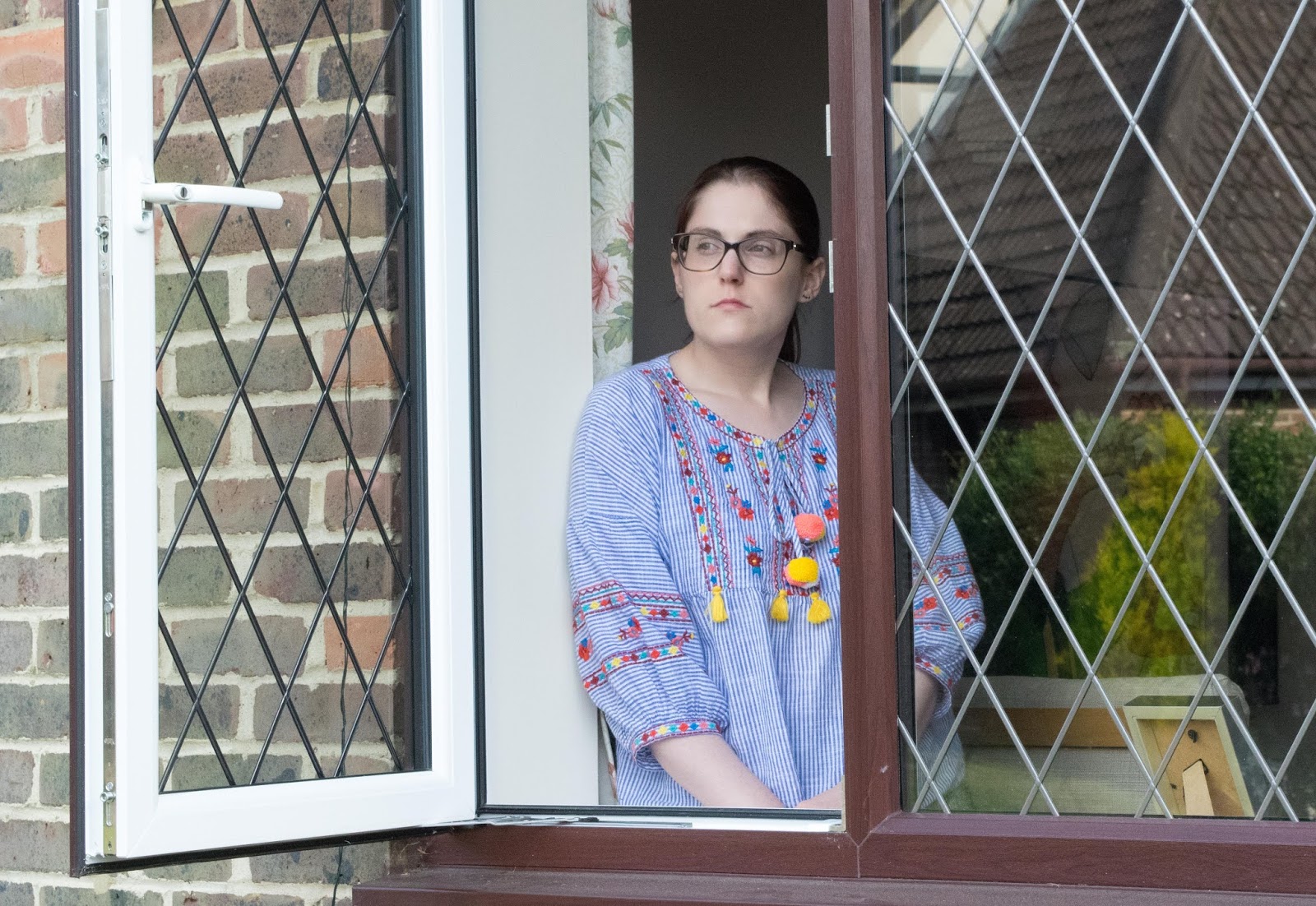
I’m Disabled through chronic illness, and the illnesses that I have can be extremely debilitating. They leave me feeling, often, incredibly unwell, mean I spend a lot of time in hospital having invasive tests and treatments, have resulted in me missing out on huge parts of my life and stop me being able to do a lot of the ‘normal’ things that my peers are able to do. So, I think it’s understandable that I don’t feel particularly proud about being Disabled. I often feel angry, upset, frustrated – I spend so much time grieving the things I’ve lost – and most of the time, I find myself wishing I wasn’t Disabled. So, I’ve often felt like a bit of a hypocrite when I’ve spoken about Disability Pride and have worried that it’s yet another space that I don’t belong in.


But the more I’ve read about Disability Pride Month, and the more I’ve listened to other Disabled people talking about their experiences, the more I’ve realised that I do belong in this community and that my experiences are valid. Disability is such a complex thing, and no two Disabled people are going to have the same experiences or feelings. I think it’s so important to remember this and to make space for the stories of Disabled people from all backgrounds. I’ve gradually come to learn that it’s absolutely OK to have mixed feelings on your Disability, and that actually it’s pretty normal! I don’t think I follow one Disabled person that hasn’t, at some point, been frustrated by some element of their Disability. 


So, I’ve been trying to look at my place in Disability Pride Month a bit differently this year. I’m reassuring myself that I don’t have to be overwhelmingly positive about being Disabled if that’s not how I feel now. But there are still plenty of things related to my Disability that I can feel proud about. I can feel proud about taking up space wherever I am and remind myself that, as a Disabled person, I deserve to be able to access the world just as non-Disabled people can. I can stop apologising every time I ask for my needs to be met. I can stop feeling embarrassed every time I have to ask a shop to clear furniture and cleaning equipment out of their Disabled toilet or changing room just so I can use it. I can stop saying sorry for ‘getting in the way’ in my wheelchair. I can just be unapologetically me – Disability and all. 


This month is going to bring up a lot of different feelings for Disabled people and that’s OK. The whole point of this month is to amplify Disabled voices from all backgrounds so we can share our experiences, the struggles we face, our triumphs and what the world can do to make life more accessible for us. So please don’t feel like I felt, that if you’re not completely positive about being Disabled that you don’t belong in this community. Because every single Disabled person has a place in the Disabled community, and your thoughts and feelings around Disability Pride Month matter just as much as the next Disabled persons’ do. So, whether you use this month to shout about Disabled joy, talk about the struggles you face as a Disabled person or just sit quietly with your Disability and show yourself some TLC – there’s no right or wrong way to mark Disability Pride Month.


Have you heard of Disability Pride Month before? How do you like to mark it?


Monday, 5 April 2021

Getting the Covid-19 Vaccine - My experience as a Disabled and Chronically Ill Person

I’ve debated writing this post for a few weeks now, as I know there are so many different thoughts and feelings around the vaccination process. But I thought it might be helpful to share my personal experiences of getting the Covid-19 vaccine. I know before I received mine, I was searching online for posts by others in the Disability/Chronic Illness community, but I struggled to find much. So hopefully if someone else is looking for what I was looking for, they might find something helpful in this post. 


I want to start by acknowledging a couple of things. Firstly, I know people have different thoughts and feelings about getting this vaccine, particularly in the chronic illness and Disability community. I think it’s completely justified to have concerns about side effects, especially when you already live with medical issues, and so I totally understand that not everyone will feel getting the vaccine is the right thing for them at the moment. This post isn’t here to tell anyone that they should or shouldn’t get the vaccine. Only to share my experiences of the process. It’s not an easy choice to make, so you need to do what’s right for you and your medical condition(s). 


The second thing I want to recognise is how difficult it may be to read this post if you are still fighting to be prioritised for a vaccine. So many chronically ill and Disabled people have been left off the list, and it makes me so sad and angry that this is happening. Throughout this pandemic, Disabled people have been treated appallingly – it’s been exhausting and demoralising. And the last thing people need, after being told we are ‘vulnerable', is to have to fight to be protected. It’s something I will continue to campaign for because no-one should be fighting this alone.


A bit about my health


If you’re a new reader of my blog, you may not know much about me, so I thought I’d start with a quick rundown of my current health issues and why I should be in a vaccine priority group. I’ve had problems with my health since I was a baby, but things went downhill pretty quickly at the age of 15. I was originally diagnosed with ME/CFS, but this never seemed to really explain all of my symptoms. Ten years later, I was finally diagnosed with Hypermobile Ehlers-Danlos Syndrome (hEDS), Postural Orthostatic Tachycardia Syndrome (POTS), Gastroparesis, Intestinal Dysmotility, Bladder Dysfunction and Mast Cell Activation Syndrome (MCAS). I also have a diagnosis of Asthma (as well as Depression, and am currently on the waiting list to be assessed for Autism). It’s difficult to know whether I do have ME/CFS alongside these things – some Doctors think I do, while other Doctors aren’t so sure. All I know is, I really struggle with chronic fatigue and various other symptoms that could be explained by an ME/CFS diagnosis, and if I catch a virus (which I do pretty often!) it can really set me back and take a long time to recover from (if I recover completely at all). 


I didn’t receive a Shielding letter when we first went into Lockdown, as my asthma isn’t severe enough and my other conditions didn’t fit the criteria. I made the choice to Shield however, as I know how much a virus or infection can set me back. But because of this, I knew I wouldn’t be in priority Group 4 for the vaccine rollout, so I really hoped I would be in Group 6. But when news started to break that most people with moderate asthma wouldn’t be given priority for a vaccine, I started to panic. None of my other conditions were mentioned in the priority documents – ME/CFS should place you in Group 6, but I had no idea whether that diagnosis was still on my medical records, and was pretty certain my other conditions wouldn’t automatically put me in a priority group. I’m on a Symbicort inhaler as a SMART regime for my asthma, as well as Montelukast – neither of which seemed to place me in Group 6 from what I was reading. 


The process of getting an appointment


At the beginning of February, I received a text message from my Doctors Surgery, telling me I was now eligible to book my Covid-19 vaccine and to follow the link in the message. I was pretty shocked at first, as I’d honestly thought I would have to fight to be put in Group 6 (like I’ve had to fight for so many other things regarding my health over the years!) But when I accessed the link, it took me to a webpage saying there were no appointments and that I should keep trying. Over the next week or so, I tried the link twice a day (morning and just after lunch, when I thought appointments were most likely to be released), but still no luck. Then the last time I tried the link, it told me that the link was no longer valid and that I would be contacted again when they could offer me an appointment. So near, yet so far!


So I waited, and waited, but I heard nothing. After the relief I felt when I received the original text, I was now getting more and more anxious that they’d sent it to me by mistake and that I wasn’t in fact in Group 6 at all. The news was breaking that people with moderate asthma were being removed from the priority groups, and Disabled and chronically ill friends all around me were struggling to get their jabs. I really felt like I was going to be left off the list and would have to wait until my age group was called, despite the fact I have complex chronic health problems.


A few people told me I should call my Doctors to ask what was happening, but my Surgery had put out posts on Facebook telling people not to contact them about the vaccine, and they had the same message on their website. They had also closed to anything but urgent problems to try and cope with the vaccination process, so I really felt like I shouldn’t be bothering them when they were obviously snowed under. So I just continued to wait. And as I waited, I started to see post after post on our local Facebook group from people who had received their vaccination and were in Group 6. After waiting a few more weeks and still not hearing anything, I finally decided to just drop my Doctors an email. I thought the worst that could happen would be that it went unanswered, and with news of Lockdown starting to lift, my anxiety was just getting worse so I needed to do something.


Within about five minutes of me pressing send, my mobile rang – it was someone from the Doctors saying they’d received my email and wanted to get me booked in as soon as possible, as I should have been able to get an appointment weeks ago. Something had obviously just gone wrong with the link I was sent, but because I thought I couldn’t contact them, we hadn’t been able to get it sorted. The lady booked me in to have my Covid-19 vaccine a couple of days later at my local Doctors Surgery. The overwhelming relief that I felt after hanging up from that phone call was immense. But along with that relief I also felt incredibly guilty. Guilty that I’d been able to get a vaccination appointment when so many Disabled and chronically ill people were still struggling to get theirs. I know I had nothing to feel guilty for, because I was eligible for Group 6 and so should have got that appointment weeks before. And I knew that me having my vaccine wasn’t stopping someone else getting theirs. But the mind is a funny thing and despite me knowing the logic of the situation, I still felt awful that I had got an appointment when so many others couldn’t. And that’s why I will continue to campaign about this, because everyone with a Disability or underlying condition should also be able to access a priority vaccine. You only have to look at the statistics to see how disproportionately Disabled and chronically ill people have been affected.


Having the vaccine


My vaccine appointment took place at my local Doctors Surgery, about five minutes from our house, which I was so grateful for. I was a bit concerned I might have to go to a larger vaccine hub further away (it wouldn’t have been the end of the world, but I wasn’t keen on being around a lot more people and having to use my energy to travel a further distance). But thankfully my Doctors were vaccinating those with underlying conditions locally.


On the afternoon of my appointment, my Dad drove me the five minutes down the road – we parked in the designated parking in the supermarket next door, got me into my wheelchair and I put my mask on. The short route to the vaccination centre was lined with friendly volunteers in high-vis jackets – there to help anyone that didn’t know the way or who just needed to see a friendly face. I think I spoke to more people on that trip than I have all year! My Dad accompanied me until I was outside the Surgery, as I was feeling a bit anxious and just wanted a bit of moral support. He then headed back to the car and I was met by another volunteer who asked me a few initial questions. I can’t remember exactly what they asked, but it was something along the lines of asking my name, checking I didn’t have Covid symptoms, taking my temperature and giving me some hand gel. 


I was then escorted through the exit (as the Disabled access was better that way) and straight into one of the consulting rooms, where I was met by a Doctor and a Nurse. They introduced themselves and explained that the Doctor would be giving me the vaccination and that the Nurse was doing the admin side of things. I was then asked several more questions, including was I feeling well in myself, did I have any allergies, had I had a positive Covid test recently and did I have any questions of my own. I explained very briefly about my medical history and said that I felt as well as I normally do! And I also let them know I have Mast Cell Activation Syndrome (MCAS), which causes me to have random allergic reactions to anything and everything! This was the thing that concerned me most, as I was worried they either wouldn’t give me the vaccination at all, or that I might have to contact other Doctors to be given to go-ahead.


I don’t think the Doctor had heard of MCAS, so I had to give a bit of an explanation about what it is and how it affects me. He then asked if I had ever needed to use an Epipen for a reaction, or if I had even needed to be resuscitated because of a reaction (which I answered no to both questions). He then reassured me that he wasn’t too concerned about which vaccine he gave me, and that I would be asked to stay for 15 minutes afterwards anyway, so if I did start to feel unwell they could deal with it then. 


Once we’d chatted through all these things, it was time for them to give me the vaccine. I was given the Pfizer vaccine, which surprised me a little bit, as the AstraZeneca is usually preferred if someone has issues with allergies. But I think because I’ve never needed an Epipen, they were a bit more relaxed with which one they chose to give me. Having the actual injection didn’t bother me particularly, as I’ve had so many injections and blood tests over the years! Some people have said they didn’t feel the injection going in, but I personally did, although it only lasted a few seconds. I was then given my card telling me which vaccination I had received, the batch number and the date, as well as some paperwork about ingredients, side effects and so on.


After having my vaccine, I was then directed to wait in the waiting room (or departure lounge as they called it!) for 15 minutes. There was a digital clock on a TV screen, and the time I could leave was written on my paperwork. The only thing I noticed as I sat and waited was that I had started to feel quite dizzy and hot, but this could be completely unrelated to the vaccine. After my 15 minutes were up, I left the Surgery, went back to meet my Dad and he drove me home.


Side Effects


By this point, I was feeling pretty tired (not vaccine related, just my ‘normal’ chronic fatigue), so when I got home I lay on the sofa and fell asleep for quite a while. When I woke up, I noticed I was still feeling quite dizzy, especially when I sat or stood up. As the evening went on, the dizziness continued and my arm started to hurt more. I also generally just started to feel a bit worse in myself than I normally do – nothing specific, just generally feeling like I was run down.


That night, I slept through the whole night without waking, which is pretty unusual for me (usually I will at least wake up once to go to the loo!) I woke up quite late and still just felt absolutely exhausted. Now, this isn’t unusual for me, as I do struggle with chronic fatigue, but this felt like more than that. The best way that I can describe how I felt is how you feel when you’re coming down with the flu. Every single joint in my body hurt – even my fingers and toes were painful to move, I had a headache, felt shivery (I didn’t have a temperature, but felt like I did), had a lot of pain in my tummy and back (it kind of felt like it does when I have a kidney infection), felt really sick and dizzy and just unbelievably tired. The arm I had the injection in was also really sore – I found it hard to lift it or do much with it because of the pain. I also seemed to develop earache, which I thought was a bit random! 


It’s always difficult to distinguish side effects of a medication/vaccine when you’re chronically ill, as a lot of these symptoms are ones I get as a result of my chronic illnesses. But as these all came on together soon after having the vaccine, it feels safe to assume that they were probably vaccine side effects. I take regular pain medications, including Paracetamol, but if I didn’t, I would have definitely taken Paracetamol to try and help with the side effects. It did seem to help the headache and muscle/joint pains a bit, although they were definitely still very much there! 


On the first day, I made the mistake of trying to do some editing at my computer. I really needed to get a video finished and thought I could just push through the symptoms like I often try to do with my chronic illness symptoms. But in retrospect, I think I would have been much better off spending the whole day taking it easy. After struggling to sit upright and concentrate (my brain felt really foggy – even more so than it normally does), I was just feeling increasingly unwell, so eventually listened to my body and fell asleep on the sofa for most of the afternoon. It was definitely what my body needed at that point. That night I didn’t sleep so well and kept waking up in pain (both from the injection site and just general joint and muscle pains).


On Day Two, I didn’t feel a whole lot better, so I decided from the outset to just rest and actually listen to my body. I continued to find the regular Paracetamol helpful and slept on and off throughout the day. Most of the symptoms were still there, although as the day went on, the joint and muscle pain did seem to lessen a little bit. Over the next few days, I found that the symptoms gradually started to reduce. It didn’t happen particularly quickly (I hadn’t expected it to) but I did seem to feel noticeably less awful with the side effects each day (although chronic illness symptoms were still making me feel rubbish!) I’d say it took a good few weeks though before I felt like I was back to my ‘normal’ level of chronic illness symptoms. The side effects that seemed to persist the most were dizziness, brain fog, utter exhaustion and just feeling generally run down. I also noticed my POTS symptoms like palpitations and feeling faint seemed to flare up – whether this was related to the vaccine I don’t know, but it did happen in the weeks after having it. I think I’m back to ‘normal’ now – it’s hard to tell when you’re chronically ill, as I’m always getting flare-ups and random symptoms, but I’d say it pretty much feels like what I’m used to my health doing now.


My thoughts a few weeks on


For me personally, I’m happy that I’ve received my first vaccine and will be going back for my second one. When news of the vaccines first came out, I’ll admit that I debated whether I wanted to have one at this point in time. I had concerns about a few things, but after doing some research and speaking to medical professionals, I decided that being vaccinated was the right thing for me. As I said at the beginning of this post, I’m not here to try and convince you to have (or not have) the vaccine. That’s a decision individuals need to make for themselves, but I would encourage you to talk to a medical professional if you have any questions or concerns about being vaccinated. With this post, I just wanted to share my experiences as someone with complex chronic health problems, in case they can help someone else who is waiting to be vaccinated. 


I had anticipated getting side effects (I do with pretty much any medication or vaccination I have!) so it wasn’t a shock when I felt unwell afterwards. And actually, in my case, I was pleasantly surprised that I didn’t feel as ill as I thought I would. Perhaps that’s partly because I’m used to having periods of being quite unwell, so I was prepared to feel worse than I did. But I know the side effects vary so much from person to person, so it can be difficult to know how to prepare when you have no idea how badly you might be affected. My personal strategy was to prepare to experience severe side effects – that way, I felt ready to manage if I got really unwell and anything better than that was a bonus. And I just kept reminding myself that however unwell I was feeling from the vaccine, it would be so much worse if I actually had Covid. I’ve seen loved ones fight Covid and know how unwell some of them have been, so for me, the side effects were worth it if it gives me some protection from being as ill as these loved ones were.


If you have an underlying condition and are still struggling to be prioritised for a vaccine, the following letter templates, which can be sent to your GP, and petition, may be of some help:


The ME Association GP Letter and CCG Letter Templates


Contact GP Letter Template for Carers


Asthma UK Petition for vaccine priority


Have you had your vaccine yet or are you still waiting? If you have any other questions that I haven’t answered, please let me know


Monday, 1 June 2020

Coping with being Housebound

It’s been quite a while since I last updated my blog. I don’t really have any excuses – I thought I would have more time to do things at the moment, but for some reason I’m finding I seem to be getting less done. It’s frustrating because I have so many blog post ideas and things I want to share with you here, but my body would rather just sleep instead! However, by some miracle I’ve finally managed to get a blog post written! 

I thought today, I would share with you some ways to cope with being housebound. On the 23rd March, we were told to ‘Stay at Home’ and to only leave the house for a few specific reasons. As well as this general guidance, those with certain medical conditions received letters telling them to shield themselves (i.e. not to leave the house at all) for at least twelve weeks. And alongside those that received letters to shield, there are thousands more who are having to isolate, either because they have symptoms of the virus, or because they have other health conditions that aren’t on the shielding list but that still put them in a vulnerable position. That’s a lot of people having to stay at home – many of who are probably used to going out every day. 


Although I didn’t receive a shielding letter, I have chosen to isolate as much as possible because I have complex chronic health problems and know how vulnerable I am to a simple cold or virus. But being housebound isn’t a new thing for me. In fact, I’ve spent over half my life ‘training’ for this moment! I became ill at the age of 15 and was originally diagnosed with M.E/CFS. Years later, I finally received the diagnoses of Hypermobile Ehlers-Danlos Syndrome (hEDS), Postural Orthostatic Tachycardia Syndrome (POTS), Gastroparesis, Intestinal Dysmotility, Bladder Dysfunction, Mast Cell Activation Syndrome, Asthma and a few other random things. 

Since the age of 15, I have spent a lot of my time being either completely housebound, or only able to leave the house for medical appointments and the odd ‘nice’ thing. It can be a pretty tough and lonely existence, especially when there’s no end in sight of it ever getting any better. Over the years, I think I’ve learnt to adapt to some extent, and although I wouldn’t say it gets any easier, you develop coping strategies and your focus changes to allow you to manage a life that you could never have imagined living. 


Obviously this lockdown isn’t quite the same. The vast majority of people having to stay at home aren’t doing so because they’re too unwell to leave the house (although some are). This in itself opens up possibilities that aren’t available to people with chronic illnesses. But I do think people are getting a glimpse into what life can be like with a chronic illness. The isolation, the disappointment of seeing plans cancelled, the uncertainty over money and careers and not knowing when it will all end. It’s difficult for anyone to know how to cope with. So I thought I would share a few things that have helped me over the years of being housebound, in the hope they may help other people to cope too (both during lockdown and beyond). These tips are likely to vary in usefulness depending on your level of health and why you’re isolating (i.e. if you’ve got symptoms or a chronic illness, you may not feel well enough to do all of these, whereas if you feel well in yourself, you may find more of these helpful). But hopefully there will be something for everyone here.

Stick to a routine

When I first became housebound, my routine went out of the window. I was sleeping a lot more, I was staying in my pyjamas all day and I wasn’t following regular mealtimes. This was partly down to being unwell, but also because I knew I wasn’t leaving the house, so I didn’t feel like it really mattered. But as time has progressed, I’ve realised just how important some sort of routine is for my mental health. Your routine is likely to have been flipped on its head with this lockdown. So it’s important to find a new routine that works for you. How strict and busy you make it is completely down to you, and if all it consists of is changing into some day pyjamas and making sure you eat regularly, then that’s fine. But it’s amazing how a bit of routine every day just helps to give you purpose and to keep you going.


Netflix Party

This tip is something I haven’t yet tried and that has only become available fairly recently. But if you enjoy watching films or programmes with friends and family that you’re not currently living with, this is a great way to still be able to do it. Netflix Party synchronizes video playback and adds a group chat to your favourite Netflix shows so you can watch them at the same time as friends and family, and talk about them as you watch. 

Group Video Calls

I’ve never really made use of video calls much before, let alone using group video calls! I’ve always found phone calls quite difficult with my anxiety, but since starting to use video calls, I’ve found I can cope with them a lot better (possibly because I find it easier to be able to see someone’s face when I’m talking to them). Now this is probably showing my level of technological understanding, but until this lockdown, I didn’t realise it was possible to have group video calls (I guess it’s just something I’ve never had to use!) But I’ve now been introduced to Zoom (and group chats on FaceTime) and am realising just how important they are in allowing us to keep up with our social contact. 

We have quite a big family, so it’s lovely to be able to have everyone chatting on one screen, and it also makes family birthdays during lockdown a little bit easier. I also run a mental health support group, which usually meets once a month. Obviously this has had to stop, but people still need mental health support, now more than ever. So I have been running weekly group meetings on Zoom, which has been great. I’d really recommend looking into group video calls if you haven’t already, as they are so useful for socialising with friends, family, work colleagues and support groups. 

Make a list of things you want to get done

So as I said, not all of these tips will apply to everyone, and this one in particular may not be useful if you’ve been housebound for a long time due to chronic illness, or if you’re housebound with symptoms of the virus. But if you’re at home at the moment and are feeling well, it might be helpful to make a list of all those jobs you’ve been meaning to get done for ages but have never had the time. Although I’ve been isolated for a number of years, I do have a little list on my phone of tasks I would like to achieve. It just gives me a focus and a reason to get up some days, but I don’t have a time limit on those jobs – it’s just a case of doing bits when I feel well enough. 

Although this is a great time to get things done around the house and garden, it’s also important to remember that you don’t have to be productive all the time. Our emotions and mental health are all over the place right now, so if all you feel like doing is binge-watching something on Netflix or Disney Plus, then that’s fine. Your ‘To Do’ list could include a mixture of productive tasks and things to do just for you (like reading, gaming, crafting or anything else). 


Do some crafting

This will depend very much on whether crafting is your kind of thing, so if it isn’t, then this tip isn’t for you! But if, like me, you enjoy doing crafts but never seem to have the time to do anything, perhaps try and make a bit of space in your day for getting back to what you enjoy. For example, I’ve been trying to put together a Project Life Scrapbook for the last few years, but just haven’t had the time to keep up with it. So while I haven’t got so many medical appointments and other commitments, I would really like to try and set aside a bit of time to just enjoy creating my scrapbook again. If you’ve never really done any crafts before but have always fancied giving something a go, now is as good a time as any to try something out! You don’t necessarily have to buy new materials. Ask around in your community to see if someone has any spare that they could give you. Or start with something as simple as colouring or painting – there are so many resources online to get you started with any craft project that takes your fancy.

Do a jigsaw

This is another one that will depend on what sorts of things you like doing, but if you haven’t done a puzzle since you were a child, why not give it a go? It’s surprising how good they are at distracting you from difficult thoughts, and before you know it, an hour has gone by and you’re still trying to fit the pieces together! I like the fact that, with a jigsaw, you don’t have to do the whole thing at once. You can keep coming back to it and just doing a few pieces at a time if that’s what works for you. There are so many different puzzles to try with all sorts of pictures and varying amounts of pieces. I am particularly fond of a Disney puzzle, but there really is something for everyone!

Make or find an upbeat Spotify playlist

I don’t know about you, but I find music can really help when I’m feeling down or anxious (and isolation and the current situation is enough to make anyone feel those things). Sometimes, if I’m really struggling, all I can find the energy to do is put on my favourite song and have a little sing (or dance!) along to it. So why not try putting your own playlist together? You could even have different playlists for different moods (because sometimes we all just need to wallow and cry, listening to sad songs). If you don’t fancy making your own, there are plenty to choose from on Spotify. One of my particular favourites at the moment is blogger, Beth Sandland’s, Social Distancing Kitchen Party Playlist. It’s full of throwback tunes that are sure to get you having a boogie in the middle of your kitchen!


Pamper yourself

I don’t think it should take a global pandemic for us to factor in a bit of self-care and pampering, but it’s a good opportunity to start if you don’t do it already. You might think because you’re at home all day that you don’t need to set aside specific times for relaxation and winding down, but it’s just as important to do it now than it was when you were out all day working and socialising. Setting aside time just for looking after yourself means you are telling your mind that you deserve those acts of self-care. How you pamper is up to you and what you enjoy most. You could use that face mask or bubble bath you’ve been saving for a special occasion, paint your nails, do some meditation, read a book or anything else that is ‘just for you’ and helps you to feel relaxed. 

Write some letters

Something that has helped me massively since becoming unwell (and therefore becoming a lot more isolated) is writing penpal letters. I started when I first became ill, as a charity I was put in touch with for young people with M.E. had a penpal scheme, and I’ve been writing to penpals ever since. When you’ve been at home for days, weeks or months on end, one of the highlights of your day becomes what the postman delivers through your letterbox! So instead of just getting bills or medical letters, it’s really nice to receive handwritten letters and cards from friends all around the world. These pieces of snail mail have honestly kept me going at some of the hardest times in my life. I found my penpals in all kinds of places – charities for people with the same conditions as me, Facebook support groups, Instagram and also friends that have moved away. But during this lockdown, why not start by just writing to people you know but can’t currently see in person?

Work on your blog and YouTube

Again, this one only works if you have a blog or YouTube channel (or would like to make one!) But one of the biggest reasons that I chose to start blogging was because of my chronic health problems. I have always enjoyed writing and being creative, but when I became ill they became so much more than just a hobby. They gave me an outlet to express my creativity when I struggled to do much else. They allowed me to communicate some of what I was going through, and they introduced me to a huge community of other content creators, which helped me feel a bit less alone. I’m not well enough to work a traditional 9-5 job, but having a blog and YouTube channel offer me something to help structure my days and give me a feeling of achievement. So if you’ve always fancied having a blog or making YouTube videos, why not give it a try?


Exercise your brain as well as your body

Throughout the lockdown so far, I have seen so much emphasis being put on exercise. And that’s great – it’s really important to keep your body moving as much as you can. For some, that will mean taking part in home workouts, going running or cycling or setting up a home gym. While for others, such as those with chronic illnesses, it may be as ‘simple’ as doing gentle stretches or basic physiotherapy exercises. There is no one size fits all, so don’t feel bad if your exercise doesn’t look like someone else’s. But as well as keeping your body moving, it’s also really helpful to keep exercising your brain while you’re housebound. I struggle with brain fog anyway, but definitely find my mind seems to stop working quite so well when I’m spending a lot of time at home. Like with exercise, keeping your mind working will also look very different for different people. Some may enjoy things like puzzles and crosswords, while others might play computer games, do colour-by-numbers or listen to audiobooks and podcasts. It’s about finding something that works for you and that you can manage.

Talk about your feelings

Being housebound, for whatever reason, is tough. If you’re chronically ill and/or disabled, those things bring their own complications and worries. Or if you’re usually healthy and are suddenly experiencing the need to isolate, you will probably be dealing with a whole range of different feelings. My biggest piece of advice would be to make sure you are talking about those feelings. That could be talking to the people you’re living with, talking to friends/family online, using virtual support groups or, if you feel you need a bit more than a friendly ear, getting in touch with your GP or a helpline like The Samaritans. There is no shame in finding things hard, so please don’t feel like you have to keep everything to yourself. I’ve learnt the hard way that bottling things up can end in disaster, so please just talk, talk and talk some more.


Look for ways to help others

The final thing that really helps me to cope with being housebound is looking for ways that I can help other people. I have always wanted a career that involves helping others – being a doctor, a play therapist, an Occupational Therapist or working in the police. And I find it really hard some days that I can’t do these things. Being stuck at home, too unwell to do the things I crave, can leave me feeling useless and worthless. And I can imagine, at the moment, that healthy people who have to stay at home may also feel some of these things for not being able to get out there and contribute as they usually would. But just because you’re not on the NHS frontline saving lives or a key worker keeping the country going, it doesn’t mean you can’t still help in some way. If you’re able to leave the house, why not volunteer for your local Covid response, helping to get shopping and medication for people that are shielding? Or if you’re shielding, you could offer to phone people who might be living alone, send postcards to a local nursing home or send a card to a seriously ill child through Postpals. No matter how big or how small, there are always ways to help other people, and doing things like this help my mental health bucket loads when I’m housebound. 


And there we have it – a few things you can do to help you cope with being housebound. I really hope there will be something here for everyone – whether you are housebound through chronic illness, disability or the current situation. I also hope this post shows you that you aren’t alone in what you’re going through either, and that it’s OK to reach out for help if you need it. 


Are you currently housebound or have you been in the past? Were any of these ideas helpful, or are there other things that helped you to cope?

Thursday, 30 January 2020

Femoral Osteotomy - The Operation and Early Recovery

It’s been a while hasn’t it?! I should start by wishing you all a Happy New Year – I hope 2020 will be a good one for you. Sorry it’s been quite a long time since I last updated. As you might have seen in my previous post, back in November I went into hospital for major surgery to my right leg – a Derotational Femoral Osteotomy. And to say things have been difficult would be an understatement! So I thought I would write a post updating you on the actual operation and how things have been since then. 


I had to be up really early on Tuesday 12th November 2019, as my Dad and I needed to get the first train up to London to be at UCLH for 7am. Thankfully at that time in the morning we didn’t have to worry about the traffic, so made it there in plenty of time. In fact, we were too early in the end and had to wait outside the Surgical Reception waiting for it to open! Once I’d been checked in, I was seen by a Doctor, who went through the operation with me and marked my right leg with a big arrow (just to make sure they did the correct one!) I then saw the Anaesthetist to discuss the anaesthetic and pain relief. They would normally give someone having this operation a general anaesthetic and epidural, but because I’m allergic to morphine (and they use this in an epidural), he said they would do a nerve block (and GA) instead. Working out my pain relief options was also a bit tricky because I’m allergic to so many painkillers! But we decided I would have a Fentanyl PCA (Patient Controlled Analgesic – a button I could press so I could deliver my own pain relief) post surgery. After changing into a gown and saying goodbye to my Dad, I was taken down to a small waiting room near the operating theatres. You’re only meant to be kept there for a short while, but someone had got the timings muddled up, so I ended up down there for a few hours – thankfully there was a stream of other patients coming and going for me to talk to! 

At about 1pm, I was taken down to be prepared for theatre. I was feeling pretty shivery, so they put this thing called a ‘Bear Hugger’ over me – it’s like an inflatable blanket that connects to what looks like a hairdryer, which blows warm air inside the blanket at a temperature they can control. It was so cosy – I think I need one at home! The anaesthetist gave me some sedation, although he had to give me a few doses before it had any effect. He was then able to do the nerve block, which meant lots of injections around the top of my right leg. Then came the general anaesthetic and next thing I knew, I was waking up in recovery around five hours later.


Initially, I didn’t feel too bad as I came round. The nerve block was still working, so I could feel very little pain. I was mainly just groggy and tired from the anaesthetic. Once my numbers were looking stable, I was taken up to the Orthopaedic ward. As night progressed to morning, my pain was getting more and more difficult to tolerate, despite the Fentanyl PCA. When the Doctors came round to see me in the morning, I was in tears from the pain, so they said they would get the pain specialists to come and talk to me. Unfortunately though, after seeing the Doctors, things went downhill pretty quickly.


I don’t have many clear memories from Wednesday or Thursday, so most of what I know is from what I’ve been told by medical staff and my family. After seeing the Doctors, I remember just not feeling right. I was shivering and shaking but didn’t really know why, as I definitely wasn’t cold. I was also feeling very ‘out of it’ and couldn’t really communicate with the Doctors and nurses. I think at first, they were concerned that I might be developing sepsis, and so started to follow the protocol for treating that. But then I started having seizures and was drifting in and out of consciousness throughout Wednesday and into Thursday. They did various blood tests and found that a lot of my electrolyte levels (things like potassium, calcium etc.) had plummeted very quickly, which can result in seizures. So I was attached to various drips to try and get them back into a normal range. However, this didn’t seem to make much difference and, on Wednesday night/Thursday morning, my parents were called to tell them the staff had had to do an emergency crash call because of how unwell I was. 


I have vague memories of lots of voices and seeing different faces, but everything feels very disjointed. I could sometimes hear people trying to ask me questions, but I just couldn’t seem to speak or communicate in any way. I remember having an awful headache, pain in my chest, not being able to breathe properly and feeling really scared and confused about what was happening. After the crash call, the Intensive Care Outreach Team were called to come and look after me on the ward because I was too ill for the ward staff to manage. Thankfully with their expertise, they were able to keep me out of the Intensive Care Unit and gradually, the seizures stopped and I started improving. I was sent for a CT scan to check that nothing serious had caused the seizures and that the seizures hadn’t done any damage to my brain, but thankfully that all came back clear.

Once I was a bit more stable, a Neurologist came to see my Dad and me. He had read the detailed notes that staff had kept and, based on their observations and my test results, he told me he thought I had experienced Non-Epileptic Seizures due to a Functional Neurological Disorder. Basically, when your body is under stress, either mental or physical, your brain sort of shuts down as a way of coping. He said that because I was in so much pain from my surgery and was also really unwell from my electrolytes being all over the place, that my body simply couldn’t cope and shut down, which then caused the seizures. It’s something I’ve got to look into further with a referral to a Neuropsychiatrist and I’ve also had to inform the DVLA, who are likely to revoke my license again, which I’m gutted about (but obviously understand). 

I was absolutely covered in bruises on my arms from all the needles I’d had stuck in me while I was so ill, and felt very drained, mentally and physically, as seizures really take it out of you. I was sent for an x-ray to make sure the bones in my leg were all in the right place, especially after having all those seizures, and luckily everything had held well.


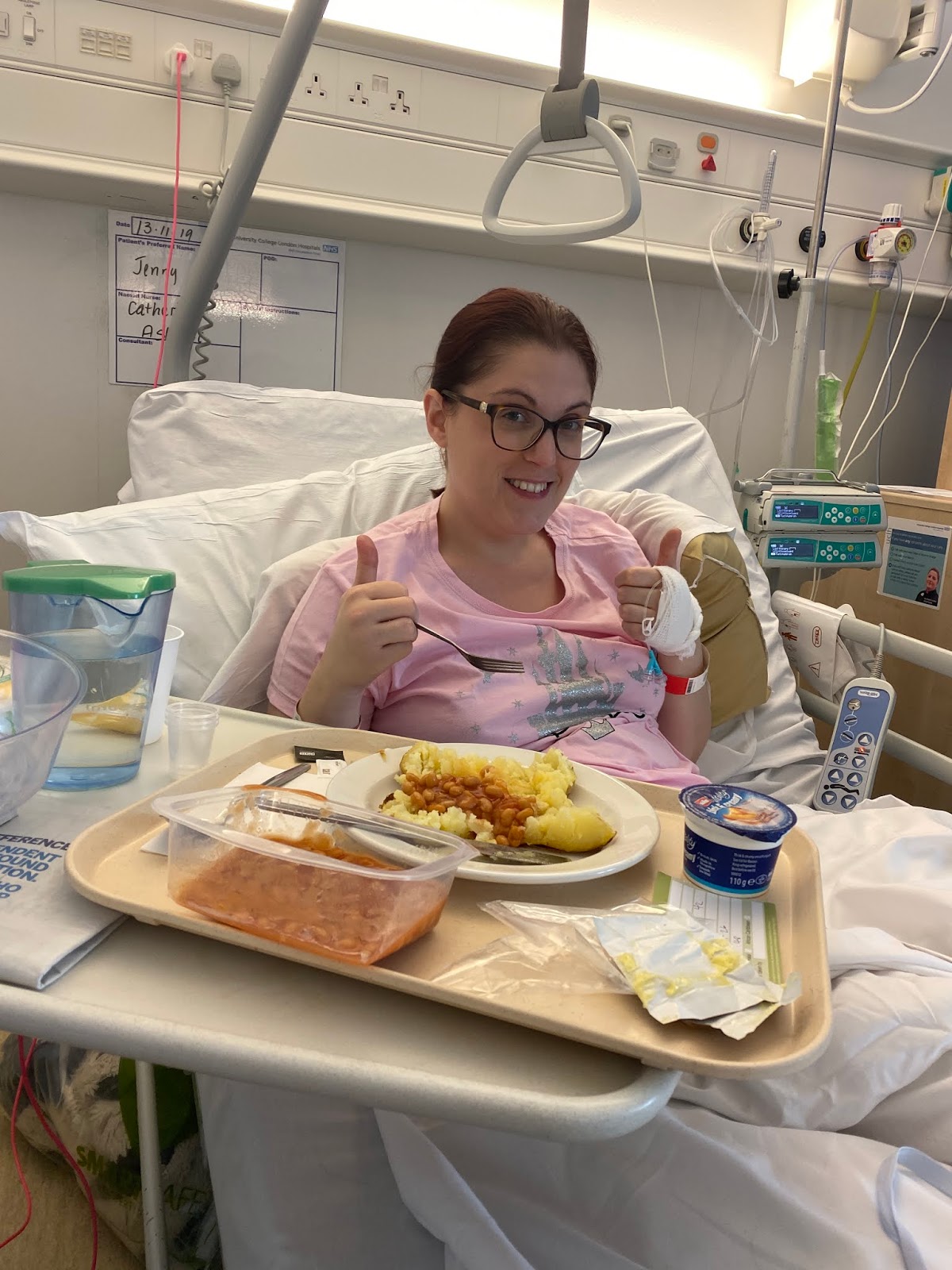
Once the Intensive Care team had stabilised me, my Dad started to help me get some nutrition inside me, first by drinking some Ensure drinks and then by spoon-feeding me with things like yogurt and potato. I gradually started to feel a bit better (as much as you can after major surgery) and was able to start sitting up a bit and eating/drinking a bit more. When the Doctors were happy that I was more medically stable, the physiotherapists came round to see me. The first time they saw me, they started by getting me to move my feet. Then they helped me to slowly sit up, put my legs over the side of the bed and stand up while holding onto a walking frame. Just that ‘simple’ task of standing up for a few seconds completely wiped me out and I slept for quite a while afterwards.


I was a bit shocked to start with at how swollen my leg was. I remember when I looked at my leg for the first time; my right thigh was pretty much double the size of my left thigh! There was also quite a lot of bruising, which gradually spread and got worse as the days went on. What with all the bruises on my arms and my right leg looking like it did, I definitely looked like I’d been in some sort of fight (and probably lost!)


One of the best things about the ward I was on at UCLH (apart from the amazing staff and lovely patients that I got talking to!) was the incredible view from our windows. Whenever I’ve been in hospital before, I’ve either not had access to a window at all, or the view has been of something like a car park or another hospital building. But with being so high up (I was on floor ten) and being in the middle of London, we had amazing views of the London skyline. I moved bays halfway through my stay, so from my first bed I could see the London Eye, and from my second bed I had a fantastic view of the BT Tower, which looked really pretty lit up at night. We all joked that people would pay top money to have a view like that of London and we were getting it for free (let’s ignore the fact I was having to recover from very painful major surgery!)


Over the next few days, the physiotherapists kept coming back to see me and we gradually progressed from standing with the frame to walking a few steps, until I could get to the toilet and back. It took me a while to get my head around putting any weight on my bad leg, firstly because it was ridiculously painful (even with lots of pain relief) and secondly, because I was so aware of my leg being completely broken and held together with metalwork that I was scared it would just all come apart underneath me at the slightest bit of movement or weight bearing. The doctors and physiotherapists explained to me though, that weight bearing as pain allows actually helps with recovery of the bones and muscles. Easier said than done when you’re in agony, but I was managing to put a small amount of weight on my toes. After several days of practising walking with the frame, the physiotherapist then started moving me over to using ‘gutter’ crutches (crutches that you lay your whole forearm in – I have injured my wrist and so standard crutches would have made the injury worse). I found the crutches pretty difficult at first because I was so wobbly, but with practise, I was just about managing to get to and from the bathroom.


I spent a week in hospital at UCLH altogether – a bit longer than expected, but with being so unwell after the surgery it took us longer to get me stable and up on my feet. I was discharged at about 6pm on Tuesday 19th November and had to make the journey home from London, which was hard work to say the least! We got a taxi from the hospital, although trying to get into the cab wasn’t easy. They put the ramp down, but it was so steep that we found it a real struggle to get my wheelchair in. We then had to get a train from Waterloo, although with it being quite late it meant the train was fairly quiet thankfully. It felt so good to get home and lay down on the sofa!


Since being home from hospital, things have been difficult. I spent the first few weeks crying a lot of the time. The pain was intense and I find anaesthetics really affect my mental health. I think it was also dawning on me quite how big this operation was and just how difficult the recovery was going to be. I had to give myself blood thinning injections in my stomach once a day to reduce the likelihood of blood clots, which took a while to get my head around, as I’ve never had to inject myself before! It also took a few weeks to chase up physiotherapy, as some paperwork went missing, so I felt a bit lost as well. I had reduced my painkillers massively (thinking it was the right thing), but after ringing the specialist Orthopaedic nurse and being told it was normal to still need a lot of pain relief, I started taking them again, which helped a bit. 


But most of my time has been spent laid out on the sofa sleeping and trying to concentrate on things on the TV. However, within the first week of being home, we noticed I was beginning to develop pressure sores on the backs of my heels. I have pretty fragile skin because of my Ehlers-Danlos Syndrome and have had the start of a pressure sore before, so knew I needed to get on top of them before they got any worse. Luckily my GP surgery were brilliant – as soon as I contacted them, I was seen by a nurse who gave me some dressings to wear while I waited for something more permanent. A Community Nurse then came out to visit me and immediately ordered a selection of pressure cushions for me to sit/lay on. I’ve been using them ever since and my heels have healed up nicely, although I am now starting to have problems with the tips of my toes so might need to get some more advice.


Starting physiotherapy in the community has been hard, although I’m lucky to have a brilliant physio who pushes me a bit, but not too much. To begin with, we were struggling to get my muscles to do much at all, so it’s been a very slow process of doing little exercises at home, along with manual manipulation from the physio regularly. I still can’t move my leg very much but my physio thinks the muscles are getting stronger and it’s a bit easier for her to do some movements with my leg. She’s been a bit concerned that things aren’t moving much, so I now have two appointments a week and I’ve been referred for hydrotherapy. I saw my surgeon recently for an eight-week check-up. He said the bone seems to have started growing but it can take at least nine months for it to fuse back together completely. I’m having a lot of trouble bending my knee and my foot now sticks out to the side, which is causing pain. At some point I may need an operation to my lower leg to straighten things out, but the surgeon said they wouldn’t touch my leg for at least nine months. So for now, it’s just a case of working slowly on my physiotherapy to try and strengthen my muscles and improve the movement. 


I had planned to do more regular updates about this operation, every few weeks to detail how the recovery was going. But I think I underestimated just how much the whole thing would knock me for six! So apologies that this is one big update instead, but I hope you’ve found it interesting (or even helpful, if you’re going through something similar) to hear about. Do let me know if you would be interested in future updates as my recovery progresses, and also when I possibly have the lower leg and other leg operated on as well. And you can always watch my Weekly Vlogs on my YouTube channel to keep up with more regular news about my recovery and life in general.


Have you had a Femoral Osteotomy? Or do you have any questions you would like to ask about my experiences of it?